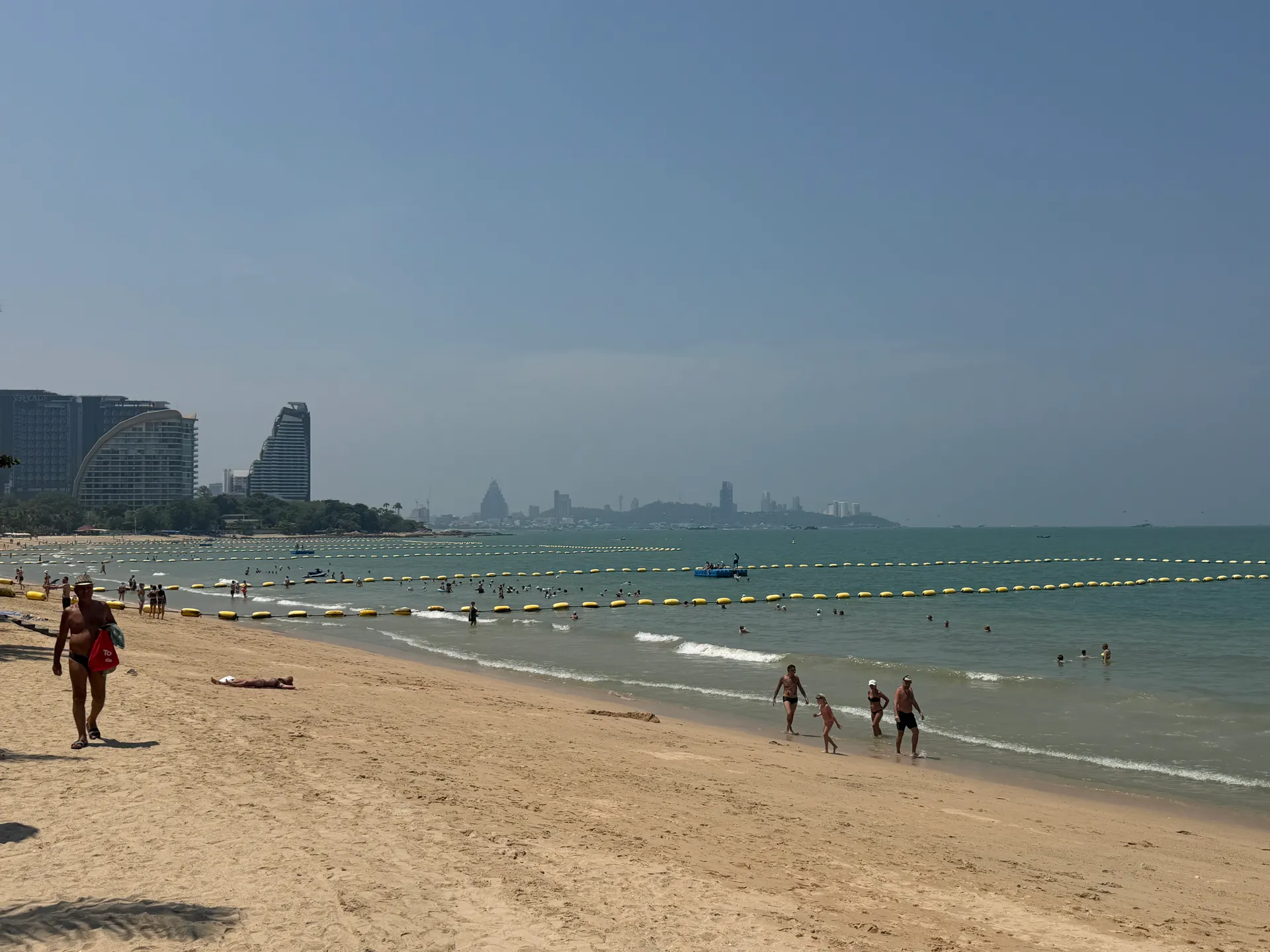
Pattaya is not Chiang Mai. The nomad scene here is smaller, the cafés are less full of laptops, and nobody is going to run a networking event you did not ask for. Some people want exactly that.
What the city does have is a beach, rents low enough that the maths works on a modest income, and a five-year visa that covers remote work without pretending you are a tourist.
Last checked 4 September 2026. Visa requirements change and two of them changed a week ago — verify with a Thai embassy or a licensed visa agent before you commit to anything.
The DTV for Remote Workers
The Destination Thailand Visa has two routes. One is for soft power activities like Muay Thai training, covered in our Muay Thai guide. The other is for remote work, and the requirements differ.
What you need to prove:
- That your income comes from outside Thailand. An employment contract, business registration, freelance portfolio, recent pay slips, client invoices, company registration or tax returns are all accepted. Consulates vary in what they want to see, which is the single most common source of confusion.
- 500,000 THB in savings, or evidence of reliable income. Some consulates want the balance to have been sitting there for months rather than deposited the week before the application.
- Health insurance with at least 50,000 USD of cover for your stay. This is a hard requirement, not a suggestion.
Two requirements were added on 31 August 2026: proof of permanent residence, and a criminal record certificate from your home country. Anything you read about the DTV that was published before then is incomplete, and a police certificate takes weeks in some countries.
Apply from outside Thailand. In-country applications are not accepted.
The limit people miss
The DTV does not let you work for a Thai employer. It covers income earned from outside the country. Taking a job with a Thai company requires a Non-Immigrant B visa and a work permit, which is an entirely different process.
If your plan involves any Thai-side client relationship, get advice before you assume the DTV covers it. Our Thailand visa rules guide covers the wider landscape.
Where to Work
We should say plainly that we have not worked from these spaces, so this is what exists rather than a ranking.
Anchor Space is the largest dedicated coworking space, roughly 500 m² in the Jomtien and South Pattaya area.
The Work Loft offers private offices and meeting rooms alongside desk space — the better fit if you take calls all day and cannot do it from an open floor.
Day passes across Pattaya’s spaces start around 5 USD, which is low enough that trying two or three before committing to a month costs almost nothing. Do that.
Cafés carry a lot of the load here. Fibre is widespread in Central Pattaya and Jomtien, and plenty of cafés have workable wifi and no objection to a long stay. This is the normal pattern in Pattaya rather than a fallback — the dedicated-space scene is small precisely because the cafés are adequate.
What you will not find is Chiang Mai’s density of coworking-as-community. If meeting other nomads is a primary reason for choosing a city, that is an argument against this one.
Internet
Fixed-line fibre in condos is fast and cheap by European standards, and most long-stay rentals include it. Check the actual connection before signing rather than trusting the listing.
For mobile, the SIM and eSIM guide covers what to buy and, more usefully, the daily throttle limits that decide whether a plan works for tethering. If you hotspot regularly, the caps matter far more than the headline price — one popular provider drops to 512 kbps after 2 GB a day.
A practical note on time zones: Thailand is UTC+7. That is a comfortable overlap with Europe if your afternoon is their morning, and a poor one with the US west coast, where a 9am call in California lands at midnight here. Nomads who leave Thailand usually leave over this rather than over anything else.
Where to Live
Long-stay rents run roughly 10,000 to 25,000 THB a month, depending on area and standard, which is the number that makes Pattaya work on a modest income.
Jomtien is the default for most remote workers: a wide beach, a calmer crowd, and close to the coworking that exists. Central Pattaya puts you near everything and near the noise. East Pattaya and Soi Buakhao are cheapest, inland, and where longer-term residents actually settle.
Our where to stay overview covers hotels; for a monthly rental you are dealing with condo agents and Facebook groups rather than booking sites. Take a hotel for the first week and look at places in person — a listing photograph tells you nothing about the road outside or the neighbour’s aircon unit.
Insurance, Which Is Mandatory Here
The DTV requires cover of at least 50,000 USD. That makes insurance a document rather than a precaution, and it needs to actually meet the threshold.
SafetyWing Nomad Essential is built for this situation — subscription-based with no fixed end date, available to EU residents, and taking applicants to 69. Nomad Complete is the heavier plan, covering routine care and pre-existing conditions, and is the one that makes sense if Thailand is going to be your base rather than a stop.
Check the coverage figure against the visa requirement yourself before applying. We are not going to tell you a given plan satisfies a consulate — that is between you, the policy document and the embassy. The healthcare guide covers which hospital to use and the exclusions worth reading, including that most policies decline claims involving alcohol or riding a motorbike without the right licence.
Money
Opening a Thai bank account has become considerably harder, and the DTV specifically has been affected — our banking and QR payments guide has the current position. Plan on running foreign cards and QR payments for the first stretch.
Thailand runs on PromptPay QR far more than on cards, and a foreign card at a Thai ATM carries a per-withdrawal fee. Withdraw larger amounts less often.
If you are paid in USDT, you have two routes and they are worth combining: an OTC exchange office for cash, and a crypto-funded Visa for everything with a card terminal. Our crypto to Baht guide has the fees for both and the network trap that catches people on the card side.
Who Pattaya Does Not Suit
The honest version, because a guide that only lists advantages is not useful.
If you need a dense nomad community, go to Chiang Mai. If you need reliable overlap with US Pacific hours, go somewhere else entirely. If you want a city that is quiet after 10pm, this is the wrong coast. And if the nightlife reputation is something you would rather not live inside, Jomtien and East Pattaya are far enough from it — but the city is still the city.
What Pattaya gives you is a beach, an international airport ninety minutes away, hospitals that work, rents that leave room to save, and a visa that lasts five years. For a lot of people that beats a livelier scene.
Frequently Asked Questions
Does the DTV let me work remotely from Thailand?
Yes, for income earned outside Thailand. It does not permit working for a Thai employer, which requires a Non-Immigrant B visa and a work permit.
How much money do I need for the DTV?
500,000 THB in savings or evidence of reliable income, plus health insurance covering at least 50,000 USD. Some consulates want the balance held for several months.
What changed on 31 August 2026?
Proof of permanent residence and a criminal record certificate were added for all DTV applicants.
Is the internet good enough for video calls?
Yes. Condo fibre is fast and cheap, and 5G covers central areas. The constraint on mobile plans is the daily throttle limit rather than speed.
How much is rent in Pattaya?
Roughly 10,000 to 25,000 THB a month for a long-stay condo, depending on area and standard.
Is there a big nomad community?
Smaller than Chiang Mai or Bangkok. Growing, but if community is your main criterion, this is not the city.
Related Guides
- Muay Thai in Pattaya: Gyms, Costs and the DTV Route
- Thailand Visa Rules 2026
- Best SIM Card & eSIM for Thailand
- Thai Banking and QR Payments
- Crypto to Thai Baht in Pattaya
- Healthcare in Pattaya
Nothing here is legal or immigration advice. Requirements change and the consequences of getting them wrong are yours — confirm with a Thai embassy or a licensed visa agent.
Some links on this page are affiliate links. If you buy through them we earn a small commission at no extra cost to you, and it never affects what we recommend — see our affiliate disclosure.
Pattaya.love Editorial Team
Local Experts since 2019
Our team of Pattaya-based writers, photographers, and long-term residents researches every guide on the ground. We visit venues, test routes, and verify every recommendation so you get actionable, up-to-date information you can trust.