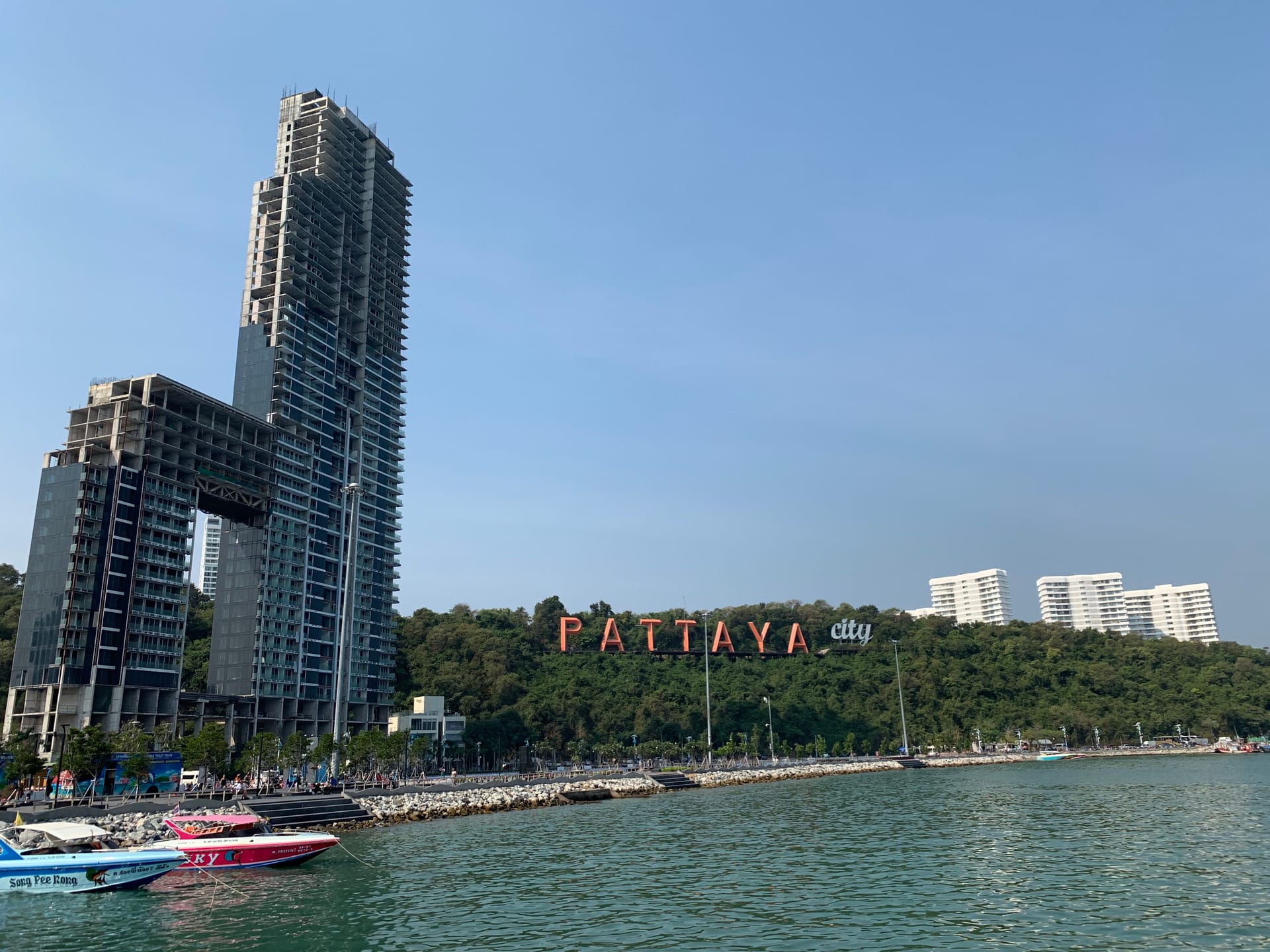
Understanding Thailand’s visa rules is essential whether you are visiting Pattaya for two weeks or planning to stay long-term. The system has multiple visa types, each with different requirements and duration. This guide covers every major option relevant to Pattaya visitors and expats in 2026.
Visa Exemption (Visa on Arrival)
Citizens of many Western countries do not need to apply for a visa in advance. You simply arrive at the airport and receive a stamp in your passport.
Duration: 30 days for most nationalities. Some countries, including those with bilateral agreements, receive 60 days. The Thai government has periodically extended this to 45 or 60 days as a tourism incentive, so check the latest rules before you travel.
Requirements: A passport valid for at least 6 months, a return or onward ticket, and technically proof of funds (20,000 THB per person or equivalent), though the funds check is rarely enforced at airports.
Extensions: You can extend your visa exemption stamp by 30 days at any immigration office in Thailand. The fee is 1,900 THB. This means a total possible stay of 60 to 90 days depending on your initial entry allowance.
This is the simplest option for short-term visitors and covers the majority of tourists visiting Pattaya.
Tourist Visa (TR Visa)
If you want a longer stay or want certainty before you arrive, apply for a Tourist Visa at a Thai embassy or consulate in your home country.
Single-Entry Tourist Visa
Duration: 60 days, extendable by 30 days at immigration for 1,900 THB. Total possible stay: 90 days.
Cost: Varies by country, typically 1,000 to 2,000 THB equivalent (35 to 60 USD).
Requirements: Completed application form, passport photos, proof of accommodation, flight itinerary, and proof of funds (bank statement showing equivalent of 20,000 THB).
Multiple-Entry Tourist Visa (METV)
Duration: Valid for 6 months from the date of issue. Each entry allows 60 days, extendable by 30 days. You must exit and re-enter Thailand to start a new 60-day period.
Cost: Approximately 5,000 THB (150 USD).
Requirements: Same as single-entry plus additional financial proof, typically bank statements showing at least 200,000 THB equivalent over the past 6 months.
The METV is a good option for visitors who want to explore Thailand over several months, perhaps combining time in Pattaya with trips to neighboring countries.
Retirement Visa (Non-Immigrant O-A)
The retirement visa is the primary long-term option for older expats living in Pattaya. The city has one of the largest retirement expat communities in Thailand, and the process is well-established.
Basic Requirements
- Age: 50 years or older
- Financial proof (one of the following):
- 800,000 THB deposited in a Thai bank account, held for at least 2 months before application
- Monthly income of at least 65,000 THB (proven by embassy income letter or pension statements)
- A combination of bank deposit and annual income totaling 800,000 THB
- Health insurance: Thai health insurance covering at least 40,000 THB outpatient and 400,000 THB inpatient care
- Criminal background check from your home country (for initial application)
Duration and Renewal
The O-A visa is initially granted for 1 year and is renewable annually at immigration. Each renewal requires that you continue to meet the financial requirements. The 800,000 THB must remain in your bank account for at least 3 months after renewal, after which you can draw it down to no less than 400,000 THB for the remainder of the year.
Non-Immigrant O Visa (Applied in Thailand)
An alternative to the O-A is the Non-Immigrant O visa, which you can obtain by entering Thailand on a tourist visa or exemption, then converting to a Non-O at immigration. The financial requirements are the same, but you avoid the embassy application process abroad. Many Pattaya expats prefer this route.
90-Day Reporting
All retirement visa holders must report their address to immigration every 90 days. This can be done in person at the immigration office, by mail, or online through the TM47 system. Missing a report results in a 2,000 THB fine.
Marriage Visa (Non-Immigrant O Based on Marriage to a Thai National)
There is no visa called a “marriage visa” in Thai law. What expats mean by it is a Non-Immigrant O visa based on marriage to a Thai national, extended one year at a time at your local immigration office. It has no minimum age, which makes it the main long-stay route for anyone under 50 who is married to a Thai.
Getting the initial Non-O. Either apply at a Thai embassy or consulate in your home country with your marriage certificate, which gives you a 90-day Non-O to enter on, or enter Thailand on a visa exemption or tourist visa and convert to a Non-O at immigration. Conversion costs 2,000 THB and you need at least 15 days remaining on your current stay when you apply.
The one-year extension. Once you hold a Non-O, you apply for a one-year extension of stay, fee 1,900 THB. The financial requirement is one of two things, not a combination:
- 400,000 THB in a Thai bank account in your own name, seasoned for at least two months before the application, or
- 40,000 THB per month of income, shown through twelve months of bank statements with the deposits visible, plus an income letter from your embassy if yours still issues one.
Experienced expats often advise holding 800,000 THB or 65,000 THB a month instead. Those are the retirement figures, not the marriage ones; the logic is that if you are over 50 and meet them, you can switch to a retirement extension at any time, which involves no home visit and no questions about the marriage. If you are under 50, the 400,000 and 40,000 figures are what apply.
The paperwork. Marriage certificate (Kor Ror 3) and the marriage registration extract (Kor Ror 2), both recent; your spouse’s ID card and house registration (tabien baan); your passport, TM6 if you have one, and current TM30 receipt; the lease or title deed for where you live; bank book, a bank letter dated the same day, and statements; a hand-drawn map to your home; passport photos of you; and photos of the two of you together at home, inside and outside, with the house number visible. Immigration compares these photos against the TM30 address and the lease. Take them properly.
What actually happens. You apply with your spouse present. Both of you may be interviewed, separately or together. You receive a 30-day “under consideration” stamp and come back a month later, again with your spouse, for the full one-year stamp. In between, immigration may visit your home, often unannounced, and may ask your neighbours whether you live there as a couple. This is a check for sham marriages and it is applied to everyone; a genuine couple with a tidy file passes it without drama. Provincial offices, including Pattaya’s, have a reputation for looking harder at the map and the photos than Bangkok does.
Re-entry permit. A one-year extension is cancelled the moment you leave Thailand unless you hold a re-entry permit. Single re-entry is 1,000 THB, multiple re-entry is 3,800 THB, available at the immigration office or at the airport before departure. Get the multiple if you will leave more than once in the year. This is the mistake that costs people their visa most often.
Ongoing. 90-day reporting applies as with every long-stay visa. The extension is tied to the marriage: if the marriage ends, so does the basis for the stay. A marriage visa does not include the right to work, but a work permit on this visa is easier to obtain than on most others, as the usual four-Thai-employees-per-foreigner rule is halved; ask a lawyer before relying on that.
In Pattaya, marriage extensions are handled at the Jomtien immigration office (see below), which covers Chonburi province. Bring your spouse, bring every document in the list above, and bring a second copy of each.
Thailand Elite Visa
The Thailand Elite visa is a premium long-stay option that bypasses the complexity of traditional visas. It is essentially a membership program run by Thailand Privilege Card Company, a government-affiliated entity.
Membership Tiers
- Elite Easy Access (5 years): 600,000 THB. Provides a 5-year multiple-entry visa with airport fast-track services.
- Elite Superiority Extension (20 years): 1,000,000 THB. Same benefits over a longer period, with additional perks like annual health checkups.
- Other tiers offer family packages, corporate options, and combinations with golf and spa privileges.
Key Benefits
- No financial requirements beyond the membership fee
- No age requirement
- No 90-day reporting (the program handles it for you in most cases)
- VIP airport services including fast-track immigration
- Each entry allows a stay of up to 1 year
The Elite visa is popular with digital nomads, younger expats, and anyone who wants long-term access to Thailand without meeting retirement age or financial deposit requirements. The upfront cost is significant, but spread over 5 to 20 years, it can be more convenient than annual visa renewals.
Education Visa (Non-Immigrant ED)
The education visa is available to those enrolled in approved language schools or university programs in Thailand. Several Thai language schools in Pattaya offer courses that qualify for this visa.
Duration: Initially 90 days, extendable in 90-day increments for the duration of your course, typically up to 1 year.
Cost: Course fees vary from 20,000 to 40,000 THB per year depending on the school. Visa extensions cost 1,900 THB each.
Requirements: Enrollment confirmation from an approved institution, attendance requirements (usually 2 to 4 classes per week).
This is a viable option for younger visitors who want to stay in Pattaya long-term while learning Thai. However, immigration has cracked down on schools that offer visas without real instruction, so choose a reputable institution.
Digital Nomad Visa / Long-Term Resident Visa
Thailand introduced the Long-Term Resident (LTR) visa aimed at remote workers, digital nomads, and high-income professionals. While not exclusively a “digital nomad visa,” it serves that audience.
LTR Visa Requirements
- Annual income of at least 80,000 USD in the past 2 years
- Health insurance coverage
- Employment with an established company or proof of freelance/remote work
Duration: Up to 10 years (5 years initially, renewable for another 5).
Tax benefit: LTR holders pay a reduced personal income tax rate of 17% on Thai-sourced income.
This visa is aimed at high earners and does not cover the average backpacker working on a laptop. For most remote workers earning below the threshold, the combination of tourist visa entries and occasional border runs remains the practical reality.
Pattaya Immigration Office
The immigration office serving Pattaya is located on Soi 5, Jomtien (officially Jomtien Soi 5, off Jomtien Second Road). It handles visa extensions, 90-day reporting, re-entry permits, and other immigration services.
Practical Tips for Immigration
- Arrive early. The office opens at 08:30 and queues build fast. Being there by 08:00 is advisable for extension applications.
- Bring photocopies. You will need copies of your passport photo page, your current visa page, your TM6 departure card (if applicable), and your most recent entry stamp. There are copy shops nearby, but having them ready saves time.
- Dress respectfully. No tank tops, shorts above the knee, or sandals. Immigration officers can and do turn people away for inappropriate dress.
- Bring passport photos. Two 4x6 cm photos are required for most applications. Photo shops are available near the office.
- Processing time: Extensions are usually processed same-day, though during peak season (November to February) it may take longer.
TDAC — Fill It In Before You Fly
The Thailand Digital Arrival Card replaced the paper arrival card and is mandatory for everyone. It is a frequent cause of delay simply because people do not know it exists until they are standing in the queue.
The fastest way to file it is the THIM app — Thailand Immigration Management, the Immigration Bureau’s own app for iPhone and Android. You point the camera at your passport, most fields populate themselves, and the whole thing takes about three minutes. It is what we use.
Two things worth being clear about:
THIM does not replace the TDAC. The card is the requirement; the app is one way to submit it. You can also file it through the official web form.
Filing is free. A cluster of third-party sites and apps charge a “service fee” for submitting a form that costs nothing. If you are being asked to pay, you are on the wrong one.
TM30 — The Address Report Nobody Explains
This is the requirement that quietly derails extensions and 90-day reports, because most people have never heard of it until it blocks something.
What it is: whenever a foreigner takes up residence at an address in Thailand, that address must be reported to Immigration within 24 hours. Every move needs a new one — a new condo, a new hotel after a trip upcountry, a return from abroad to the same flat.
Whose job it is: formally the landlord’s, the property owner’s or the hotel manager’s, not yours. Hotels file it automatically. Private landlords frequently do not, and the consequence lands on you rather than on them.
What it costs when it is missed: the responsible party faces a fine, typically 800 to 2,000 THB, and up to 10,000 where a hotel manager is liable. The bigger cost is practical — without a valid TM30 on file, Immigration can refuse to process your extension or your 90-day report, and you find out at the counter after queuing.
Do it yourself online. Immigration runs a portal at tm30.immigration.go.th where both owners and tenants can file. This is what we do rather than hoping the landlord got round to it. Register once, and each subsequent report takes a few minutes.
If you are renting long-term, ask the landlord for the TM30 receipt when you move in. If they look blank, file it yourself and stop thinking about it.
Not the same as 90-day reporting. TM30 reports where you live and belongs to the property owner. The 90-day report (form TM47) reports that you are still here and is your own obligation under the Immigration Act once you stay beyond 90 days on one permission. People conflate the two constantly and then miss one.
Extension Process
Whether you are on a visa exemption, tourist visa, or any other visa type, the extension process at Pattaya immigration follows the same basic steps.
- Collect and fill out the TM7 application form (available at the office or downloadable online).
- Attach your passport photos and photocopies.
- Submit at the extension counter with the 1,900 THB fee.
- Wait for processing (usually 1 to 3 hours).
- Collect your passport with the new stamp.
Overstay Penalties
Thailand takes overstays seriously. The penalties are as follows.
- Voluntary departure (turning yourself in): 500 THB per day overstayed, up to a maximum of 20,000 THB.
- Caught at an immigration checkpoint or during a police stop: The fines are the same, but you may also be detained, deported, and banned from re-entering Thailand for 1 to 10 years depending on the length of overstay.
- 1 day overstay is usually handled with a fine and no further consequences, but anything beyond a few days becomes significantly more complicated.
The bottom line: do not overstay. If your visa is about to expire, either extend it at immigration or leave the country before it runs out.
For more general advice on planning your trip, see our first-time Pattaya guide which covers accommodation, transport, and everything else you need for arrival.
Related Guides
-
Thailand Visa for Indian Passports — India keeps visa-free entry, with a shorter stay — what changes in the coming weeks
-
Working Remotely from Pattaya — the DTV for remote workers
-
Muay Thai in Pattaya — the DTV via soft power activities
Pattaya.love Editorial Team
Local Experts since 2019
Our team of Pattaya-based writers, photographers, and long-term residents researches every guide on the ground. We visit venues, test routes, and verify every recommendation so you get actionable, up-to-date information you can trust.